Emboss Texture from Art Surface
Introduction
This topic will explain the Emboss Texture from Art Surface, describe where to find it, the options found in it, and will provide links to related topics.
Emboss Texture from Art Surface
This type of embossed texture is generated using a previously saved BobART surface file.
Navigation
To create an Emboss Texture from Art Surface feature:
- In the
 BobART
tab, right-click
BobART
tab, right-click  Emboss Model, Point to Emboss Texture, and click From
Art Surface (.bbas) File.
Emboss Model, Point to Emboss Texture, and click From
Art Surface (.bbas) File.
The Texture from Art Surface dialog displays.
Parameters
Quick Access
-
 Apply - regenerates the canvas to display the current parameters of the feature.
 -
 OK - regenerates the canvas to display the current parameters of the feature and exits the dialog.
 -
 Cancel - discards the updates to the parameters and exits the dialog.
 -
 Show or Hide all images in the graphics area - This option will show all hidden images in the graphics area. This same option will hide all images in the graphics area, besides the one being worked on for those features which utilize a loaded image.
 -
 Show or Hide the embossed BobART model in the graphics area - This option will show the hidden canvas in the graphics area. This same option will hide the visible canvas in the graphics area.
Attributes
- Name- indicates the feature name that displays in the BobART tree.
By default, it is automatically named by the feature type and
number. Note that you cannot use the hyphen (-) character with
spaces around it, as this is reserved for the automatic naming
and will be removed. You can however use it without spaces, for
example, Emboss-Body).
- Color - click the drop down to select a Theme Color or Standard Color, or click More Colors to open the Select Color dialog. Select the desired color for the feature, and click OK to set the color, or Cancel to exit the dialog.
Application Type
These options are explained in more detail in the Application
Types help topic.
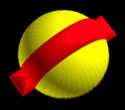
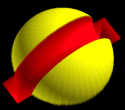
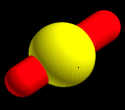
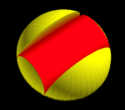
| Add | Subtract | Merge High | Merge Low |
|
|
|
|
- Add - Builds up on top of the existing features.
- Subtract - Pushes down into the existing features.
- Merge High - Builds up independent of the existing features and intersects as needed.
- Merge Low - Builds up in place of existing features.
BobArt Surface
-
Load BBAS File - Clicking this button will launch the Open dialog allowing you to select the .bbas to load. Once selected, the name of the file will appear below.
Current Attributes
BBAS Size
-
X - displays the length of the selected BobArt surface along the X Axis.
-
Y - displays the width of the selected BobArt surface along the Y Axis.
Canvas Size
-
X - displays the current length of the BobArt Canvas along the X Axis.
-
Y - displays the current width of the BobArt Canvas along the Y Axis.
Parameters
Pattern Size
-
Reset - resets the values to their default value.
-
Scale to Canvas - automatically scales the BobArt surface to fit the defined canvas.
-
The following three options scale the texture surface by a percentage of the original surface file size in the corresponding axis:
-
Scale X %
-
Scale Y %
-
Scale Z %
-
Pattern Location
-
The following two options control the distance of the embossed textures by a percentage of the original surface file in the corresponding axis direction:
-
Spacing X %
-
Spacing Y %
-
Important: It is important to know that the spacing works using the bottom left corner of the art surface as a reference position. Typing 100.0 means that the spacing between the reference positions are the width of the original surface. Typing 50.0 indicates that only half of the original width is used for spacing, meaning that only half of the embossed texture is visible due to an overlap of the textures. Typing 150.0 indicates that the distance between the reference positions is one and one-half times the original width of the art surface.
-
Rotation Angle - allows you to change the angle of the texture surface. The value is applied to all instances of the embossed texture generated by this operation.
-
Shift Between Rows % - allows you to increase the spacing between embossed textures incrementally through the model. This percentage is added to each additional row.
Boundary Geometry
Selected Geometry
|
|
|
| The list box will list the entities currently selected for the function. | |
 (Delete) - removes the highlighted item from the list.
 (Delete All)- removes all entities from the list.
-
OK - accepts any changes and regenerates the canvas. (The first time you click OK, the feature is created and added to the BobART tree.)
-
Cancel - cancels the creation of the feature (the first time that the dialog box is displayed). When editing the feature, this cancels any changes and closes the dialog box.
.
After defining the parameters, you use the Emboss Features in the BobART Tree to edit the feature as needed.
The Emboss Feature in the BobART Tree
When you finish defining the feature parameters and click OK, the feature is added to the BobART tree. You right-click each feature item in the tree to access a shortcut menu.
The Feature Shortcut Menus
 Texture from Art Surface
Right-click this item to access the following commands.
- Edit - opens the Feature dialog for you to modify the feature parameters.
- Delete - removes the feature from the tree. Regenerate to view the change in the model.
- Suppress/Unsuppress - is used to remove the feature from the model or to restore a suppressed feature. To update the model, Regenerate.
- Save As Component/STL - is used to save the feature as a component or .stl file. This saves the individual feature and not the entire model. The STL Save Option dialog box is displayed for you to set the tolerance. Next, the Save As dialog is displayed for you to select a location, name the file, and save it. The component can be used to create an Emboss from Component feature.
 Boundary Geometry
Right-click this item to access the following commands for assigning a boundary. If no boundary is assigned, the texture is applied to the entire model (stock area).
-
Re/Select -
 .
. -
Remove - removes any geometry assigned to the feature boundary.
 Art Surface
Right-click this item to access the following command.
-
Re/LoadArt Surface - displays the Open dialog box for you to locate and select a BobART surface file (.bbas file). The art surface is applied to the model when you regenerate. You can use this option to replace the current surface file.
Generating the Model
After all necessary selections are made, you must regenerate to create the model.
To Regenerate the Model, do one of the following:
- From the BobArt Tree, right-click
 Emboss Model, and click Regenerate.
 - From the feature dialog, click OK.
Note: Every time a change is made to an Emboss feature, you must Regenerate to update the model.
Related Topics
How to Create an Emboss Texture from Art Surface (.bbas) File
