; ?>)
Questions? Call Us to speak with a CAD CAM Pro!
In modern CNC manufacturing, 5-axis machining is one of the most powerful ways to increase part complexity, reduce setups, and improve surface quality. But not all 5-axis machining is the same.
Shops often compare 3+2 machining (positional 5-axis) with full simultaneous 5-axis machining. While both unlock multi-axis capabilities, they differ in machine requirements, CAM programming, fixtures, cycle times, and overall investment.
This guide breaks down 3+2 vs full 5-axis machining, helping you understand when each approach makes sense for your shop.
5 Axis Professional Best for 5 Axis Profiles:
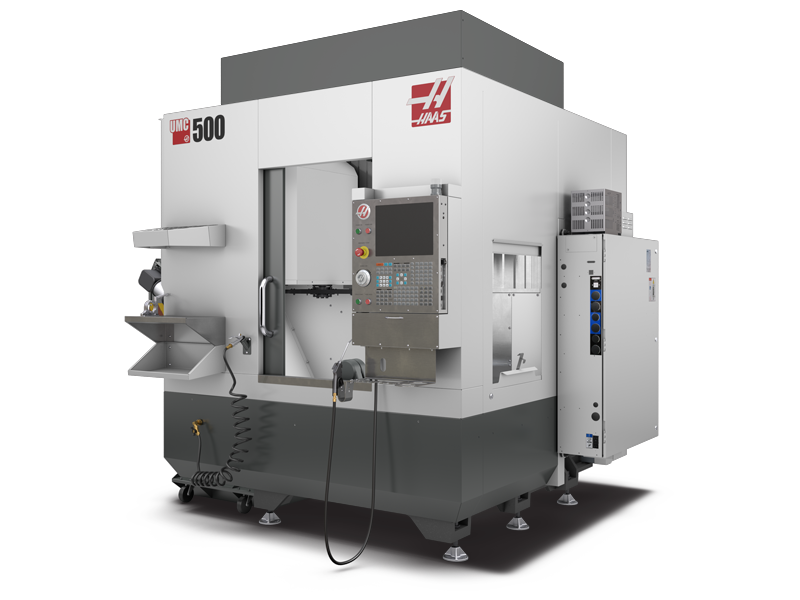
There are many reasons why your shop might consider a 5 Axis CNC Machine, CNC OEMs like HAAS Automation are making 5 Axis machines affordable for any shop, like their newer UMC 500 with a starting price of USD 133K.
What Is 3+2 Machining?
3+2 machining, also called positional 5-axis machining, uses three linear axes (X, Y, Z) and positions two rotary axes (A, B, or C) before cutting begins. Once the part is rotated into position, machining occurs using 3-axis strategies.
What Is Full 5-Axis Machining?
Full simultaneous 5-axis machining allows all five axes to move at once during cutting. This enables the tool to maintain optimal orientation relative to the surface throughout the operation.
🛠 Machine & Control Requirements: 3+2 vs Full 5‑Axis Machining
Both approaches require a 5-axis CNC machine, but control capabilities differ.
- Head/Table Configurations: Tilting head, trunnion table, or hybrid designs affect reach and part size.
- Rotary Limits: Travel range determines which positions are possible.
- RTCP/TCPC (Rotational/Tool Center Point Compensation): Critical for full 5-axis to maintain tool orientation during motion.
- Probing Systems: Useful for part setup and verification in both methods.
| Feature | 3+2 Machining (Positional) | Full 5‑Axis Machining (Simultaneous) |
|---|---|---|
| Rotary Axis Use | Fixed during cut | Dynamic during cut |
| Machine Type | Head/table configurations | High-speed rotary control required |
| RTCP / TCPC | Optional | Essential for accurate tool control |
| Probing & Compensation | Basic setup | Advanced probing and tilt comp |
| Control System Needs | Standard 5-axis capable controller | High-performance 5-axis controller |
| Rotary Limits | Less critical | Must support continuous motion |
| Post Processor Complexity | Moderate | High—requires rotary axis output |
CAM Implications
3+2 Programming Strategies
- Indexed drilling and tapping on multiple sides
- Pocketing or profiling with the part rotated
- Simpler toolpaths using standard 3-axis operations
Full 5-Axis Programming Strategies
- Swarf cutting: Using the tool’s side to cut walls in one pass
- Morphing toolpaths: Smooth transition between surfaces
- Flowline machining: Following surface curvature for superior finish
BobCAD-CAM’s Mill 5 Axis Professional supports all of these, giving programmers full control over tilt, lead/lag, and surface contact.
Fixturing & Workholding
Fixturing plays a big role in 3+2 vs full 5-axis machining:
- 3+2 Machining: Often uses simpler fixtures since parts are repositioned with the rotary axes.
- Full 5-Axis Machining: Requires rigid fixturing and often dovetail clamps to maximize reach and minimize collision risk.
- Tool Length Trade-offs: Shorter tools improve rigidity but increase the need for careful collision avoidance.
🎯 Accuracy & Surface Quality: 3+2 vs Full 5‑Axis Machining
3+2: Accuracy depends on each reorientation. Small misalignments between setups may cause blending issues.
Full 5-Axis: Maintains continuous tool contact, reducing cusps and improving surface blending.
| Factor | 3+2 Machining (Positional) | Full 5‑Axis Machining (Simultaneous) |
|---|---|---|
| Reorientation Steps | Multiple indexed moves | Continuous motion |
| Surface Finish | Good, may show blend lines | Superior, with smooth transitions |
| Tolerances | Depends on setup repeatability | Tight, with dynamic compensation |
| Cusp Control | Limited control | Advanced control over cusp height |
| Blending Quality | May require manual smoothing | Automated blending across surfaces |
For industries like aerospace, medical, and mold making where tolerances are critical, full 5-axis machining often delivers the required precision.
For industries like aerospace, medical, and mold making where tolerances are critical, full 5-axis machining often delivers the required precision.
Cycle Time, Complexity, and Cost
- 3+2: Lower programming complexity, shorter learning curve, and lower software cost. Cycle times may be longer due to multiple reorientations.
- Full 5-Axis: Faster cycle times and fewer setups, but requires higher programming skill, advanced CAM software, and a greater investment.
When evaluating ROI, consider part volume, complexity, and how much surface quality matters.
Verification & Postprocessing
Both approaches benefit from simulation and accurate postprocessing.
- 3+2 Machining: Simpler post requirements but still needs rotary output.
- Full 5-Axis: Requires accurate 5-axis machine simulation, collision checks, and advanced postprocessor settings for rotary axis limits.
✅ Decision Guide: When to Choose 3+2 vs Full 5‑Axis Machining
Choose 3+2 machining if:
- You’re transitioning into 5-axis work
- Your parts are mostly prismatic with features on multiple sides
- You want lower cost and faster programming setup
Choose 3+2 machining if:
- You work with freeform or contoured surfaces
- High accuracy and smooth surface finishes are required
- You want to reduce cycle times and rework on complex parts
| Scenario | Recommended Approach |
|---|---|
| Multi-face drilling/pocketing | 3+2 Machining |
| Complex surface blending | Full 5‑Axis Machining |
| Limited machine control | 3+2 Machining |
| High-precision organic geometry | Full 5‑Axis Machining |
| Budget-conscious prototyping | 3+2 Machining |
| Tight tolerances across surfaces | Full 5‑Axis Machining |
| Short-run production | 3+2 Machining |
| Undercuts and deep contours | Full 5‑Axis Machining |
Conclusion
Both 3+2 and full 5-axis machining have a place in modern manufacturing. For shops seeking flexibility and lower entry costs, 3+2 is a strong starting point. But for industries demanding precision, speed, and complex surface machining, full 5-axis is the ultimate solution.
Questions? Call Us to speak with a CAD CAM Pro!
Changes applied in recent releases represent a significant saving of programming and machining time; for this reason, we recommend watching all the training videos, attending all of our webinars/training events, reading our blogs, and using your online hours. BobCAD is constantly evolving; you may need to gain more knowledge and money.
Try BobCAD-CAM Free
Ready to take your CNC machining to the next level? Explore the Power of BobCAD-CAM’s Latest Version Download Free Trial